Mizuna in Bacon

320 kcal
Mizuna in Bacon is a very simple and tasty appetizer made with a minimal number of ingredients and minimal time spent. Bacon is used raw; if you do not have sliced bacon, you can use pork belly. Freeze the belly beforehand, remove the skin, and slice it into thin strips. Since the dish belongs to Japanese cuisine, this serving method preserves its natural simplicity and the expressiveness of its core flavors.
Ingredients for Mizuna in Bacon
How to Make Mizuna in Bacon
Step Title
Preparing the Mizuna
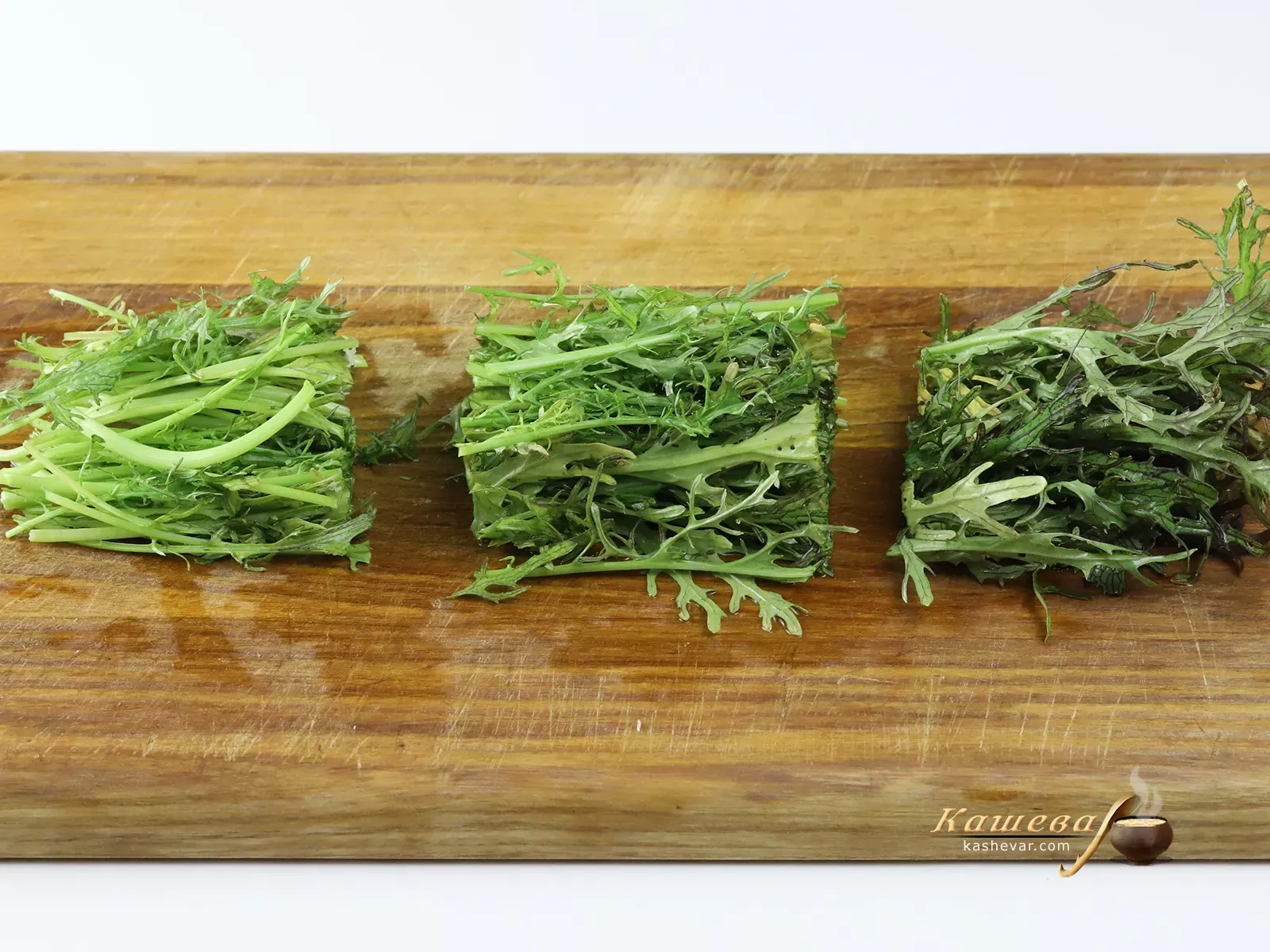
Rinse the mizuna and dry it thoroughly. Cut the greens into small portions about 7-8 cm long so the pieces are uniform in size and heat evenly during frying.
Step Title
Preparing the Bacon and Forming the Rolls
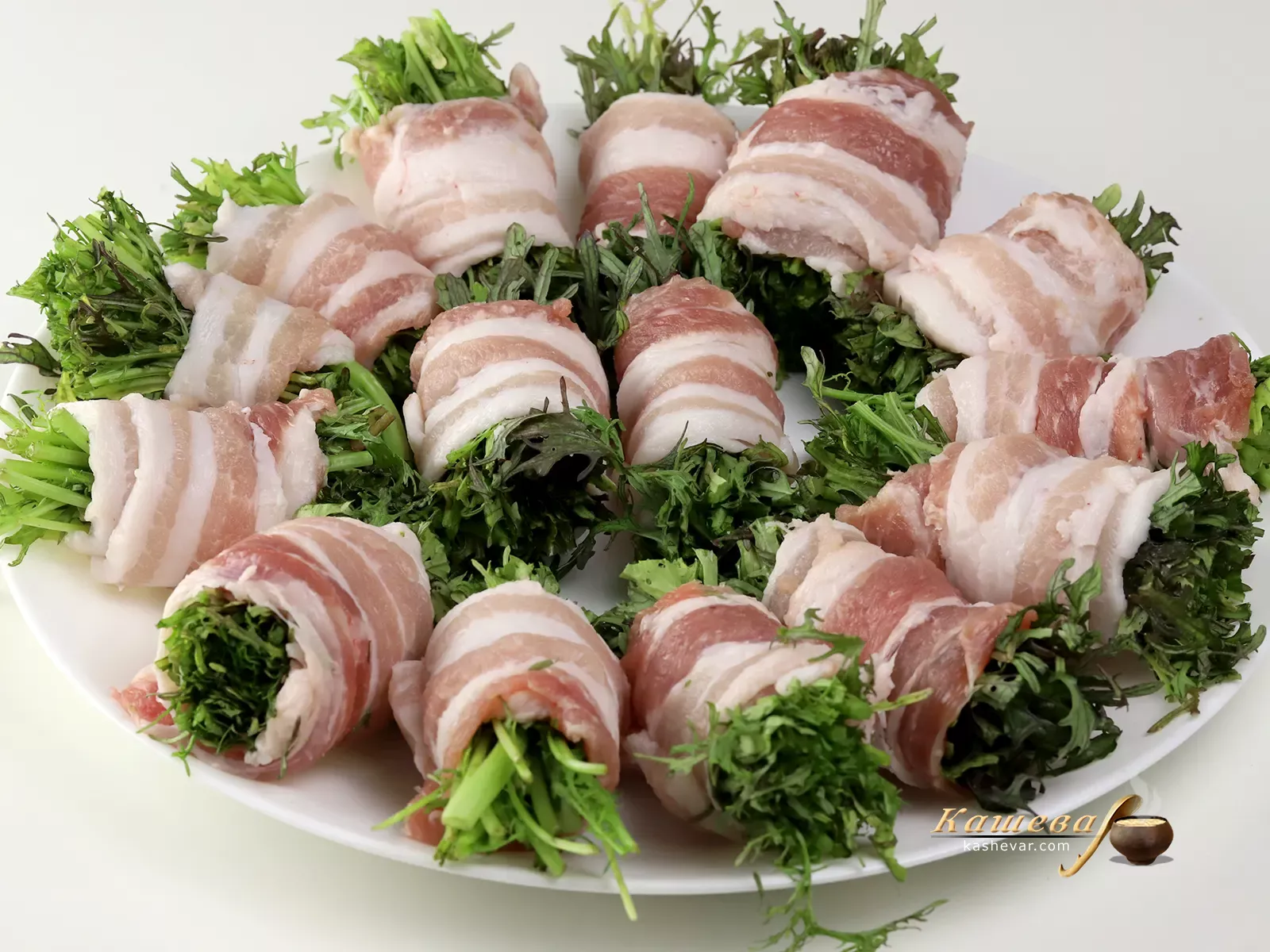
Wrap the prepared mizuna with strips of bacon. If you do not have sliced bacon, use pork belly: remove the skin, lightly freeze the piece, and slice it into thin strips so they are easy to wrap around the greens and form neat rolls.
Step Title
Frying and Serving Mizuna in Bacon
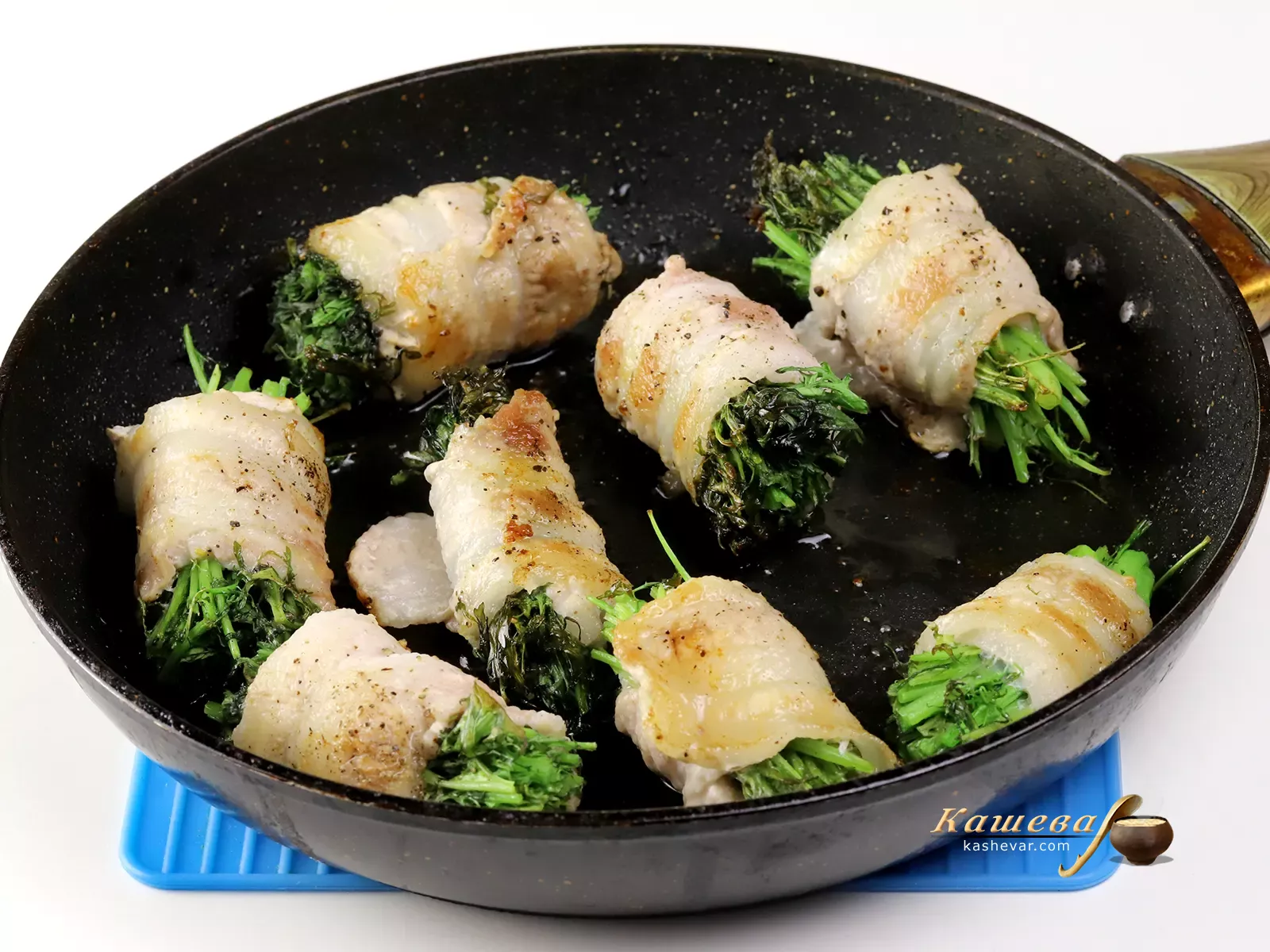
Sprinkle the rolls with salt and pepper. Heat a small amount of sesame oil in a pan and place the prepared rolls in it. Fry on all sides until golden so the bacon browns while the mizuna stays juicy inside. Serve the rolls hot or cold with any sauce you like, including soy sauce.
Tips for Mizuna in Bacon
-
Ensure the strips of bacon or pork belly are of even thickness so the rolls cook uniformly and do not dry out during frying. The optimal thickness helps keep the mizuna juicy while giving the exterior a pronounced golden color. Thin strips wrap the greens more tightly, making the rolls compact and easy to serve.
-
Lightly freeze the pork belly before slicing if you do not have ready-cut bacon. Slight freezing firms up the meat, allowing the strips to be cut evenly and neatly. This also prevents deformation during frying and helps the rolls maintain their shape without unraveling in the pan.
-
Monitor the amount of oil in the pan, as bacon releases its own fat while frying. Excess fat can make the rolls too greasy. It is best to start with a minimal amount of oil and adjust if needed to achieve a delicate crust without excessive oiliness.