Pork Cheek in Soy Sauce

315 kcal
Pork cheek in soy sauce – pork cheek is cheaper than other parts of the carcass, while in terms of taste it differs little. You just need to learn how to cook it. This recipe is not mine, it comes from the internet, however the recipe is worthy. It is prepared very simply and quickly. It can be stored in the refrigerator, but it is better and tastier to store such meat in the freezer. Although, perhaps, these are the whims of our family. You can add hot pepper to the pepper mixture for coating if you prefer a spicier flavor. The dish is served as an appetizer and is well suited for cold serving.
Ingredients for Pork Cheek in Soy Sauce
How to Cook Pork Cheek in Soy Sauce
Step Title
Preparing the Meat and Ginger
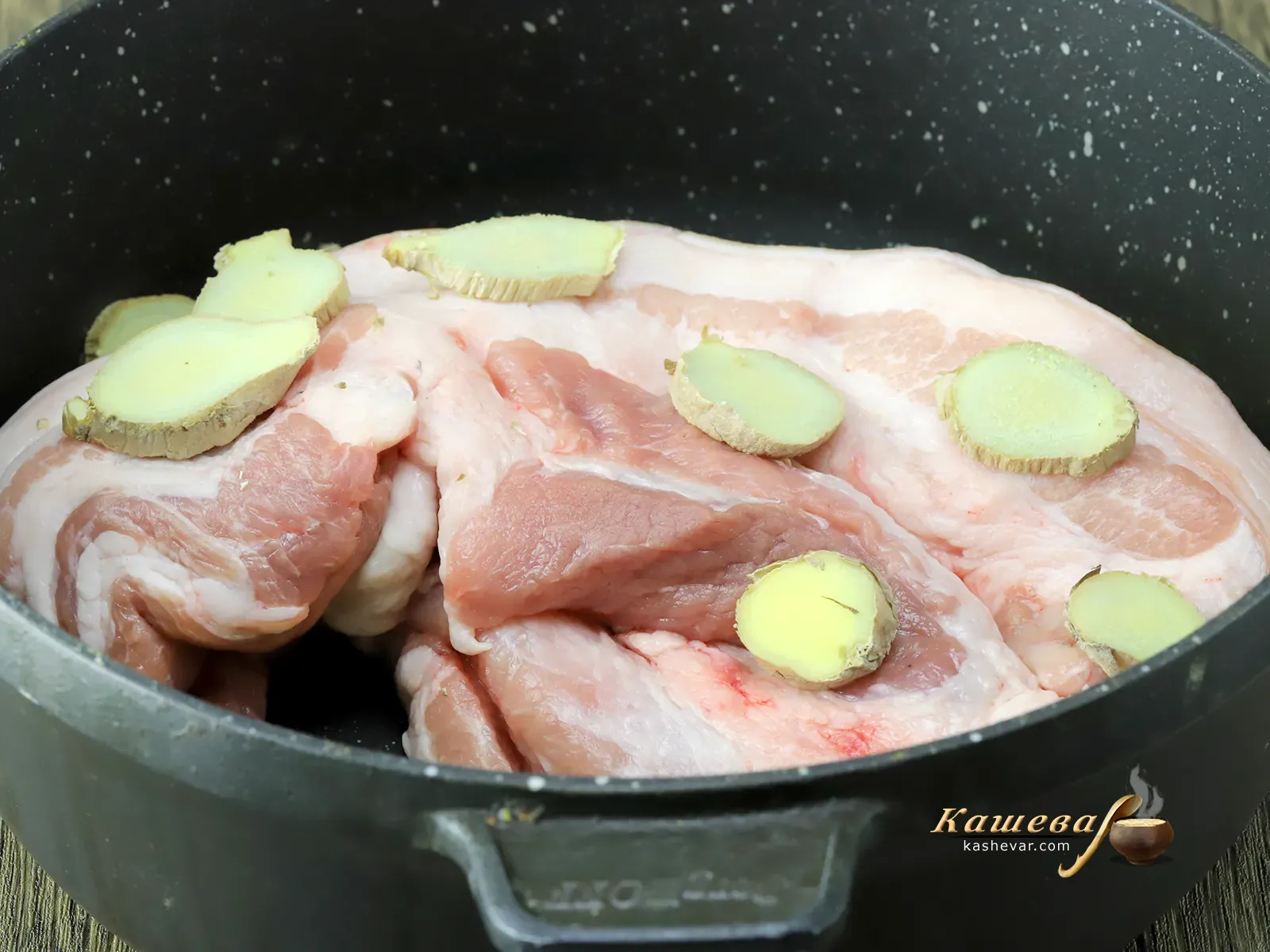
The Pork cheek in soy sauce recipe is very simple. Place the pork cheek in a deep pot without cutting it to preserve juiciness during cooking. Cut the ginger into thick pieces and place on top. The skin of the ginger can be left on, as during simmering it releases additional aroma.
Step Title
Preparing the Spices
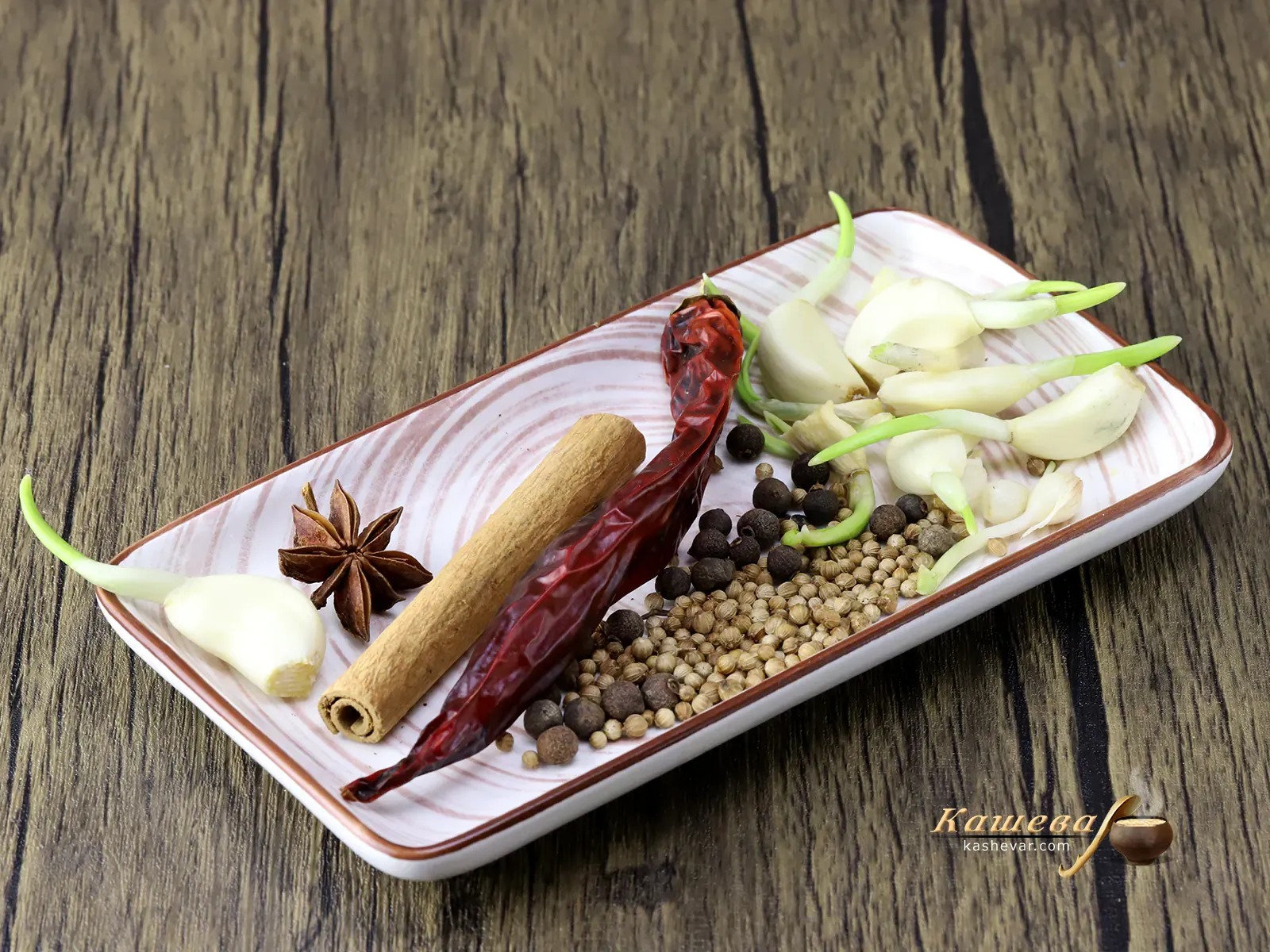
Prepare the spices that form the characteristic spicy aroma. Peel the garlic but do not chop it so it gradually releases flavor into the liquid. Set one clove aside for later use. Add star anise, cinnamon, dried chili, coriander and allspice.
Step Title
Simmering in Soy Sauce
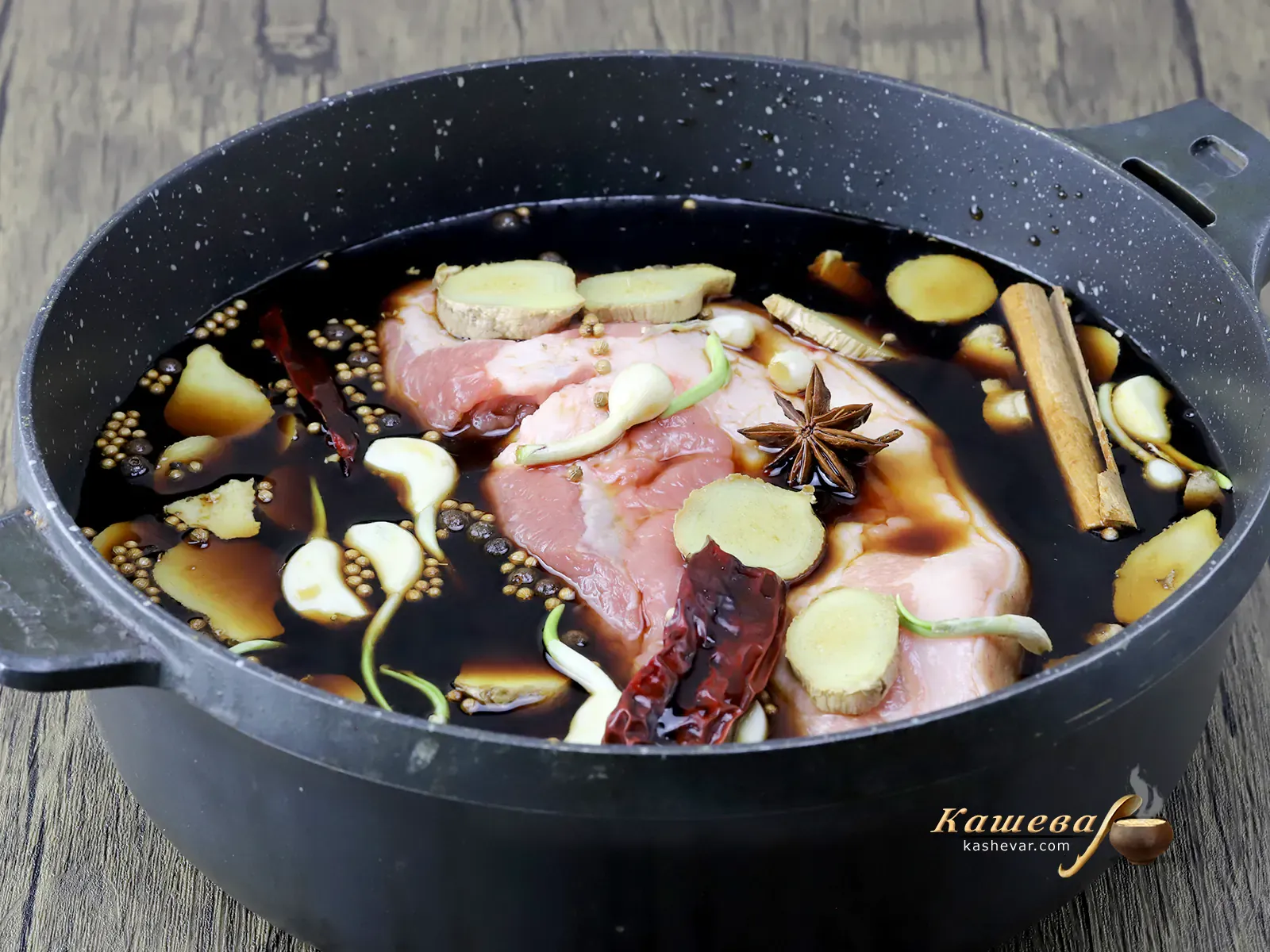
Sprinkle the spices over the meat and pour in the soy sauce and water. Cover with a lid, bring to a boil, then reduce the heat to minimum. Cook the pork cheek for one hour without allowing active boiling so the meat remains tender. If the liquid does not completely cover the cheek, turn it periodically for even soaking.
Step Title
Preparing the Pepper Mixture and Coating
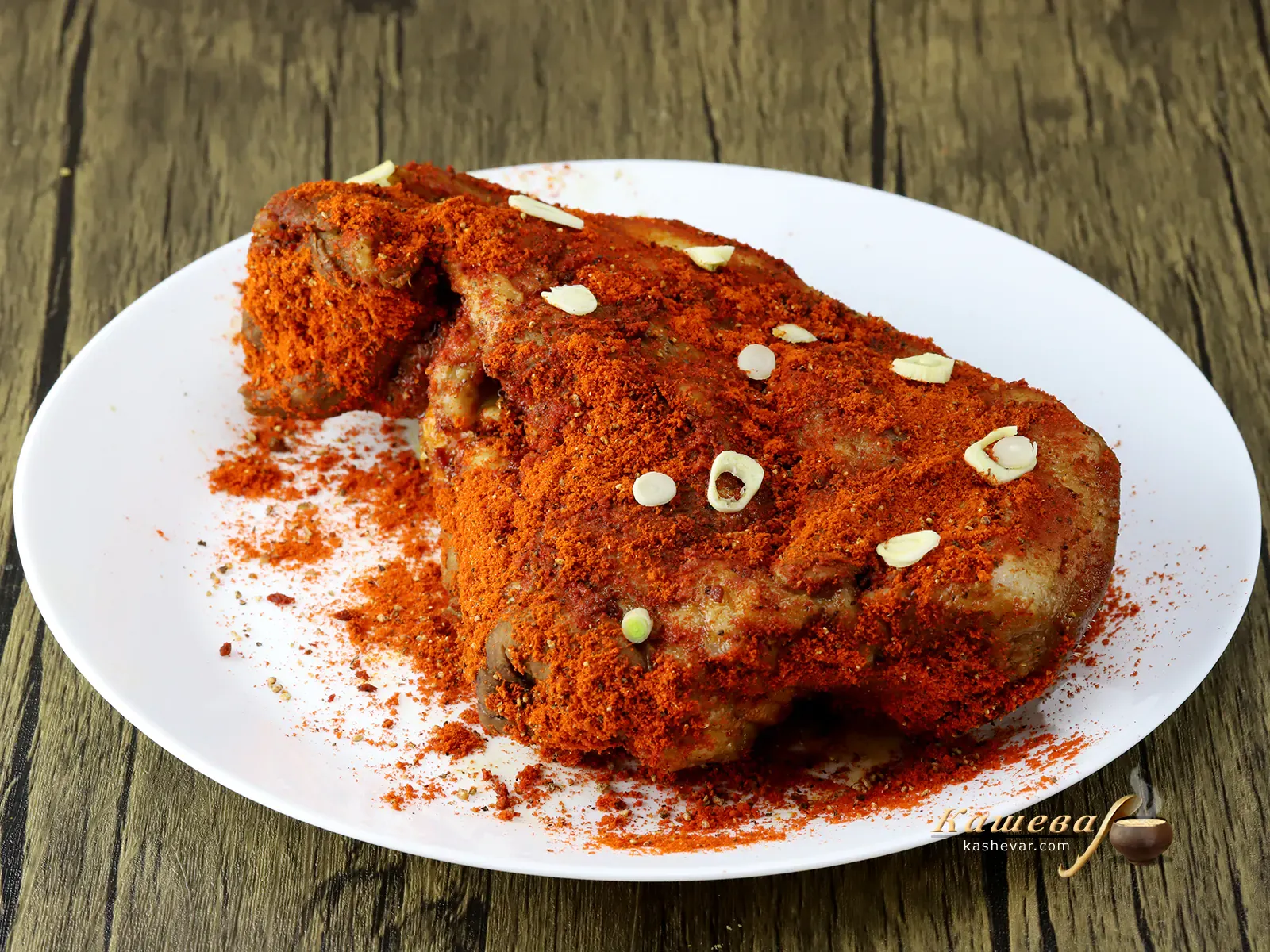
While the meat is cooking, mix paprika and ground black pepper. If desired, use smoked paprika or add hot pepper. Slice the reserved garlic clove into thin slices. Remove the cooked pork cheek from the liquid and evenly coat it with the pepper mixture on all sides.
Step Title
Cooling and Resting
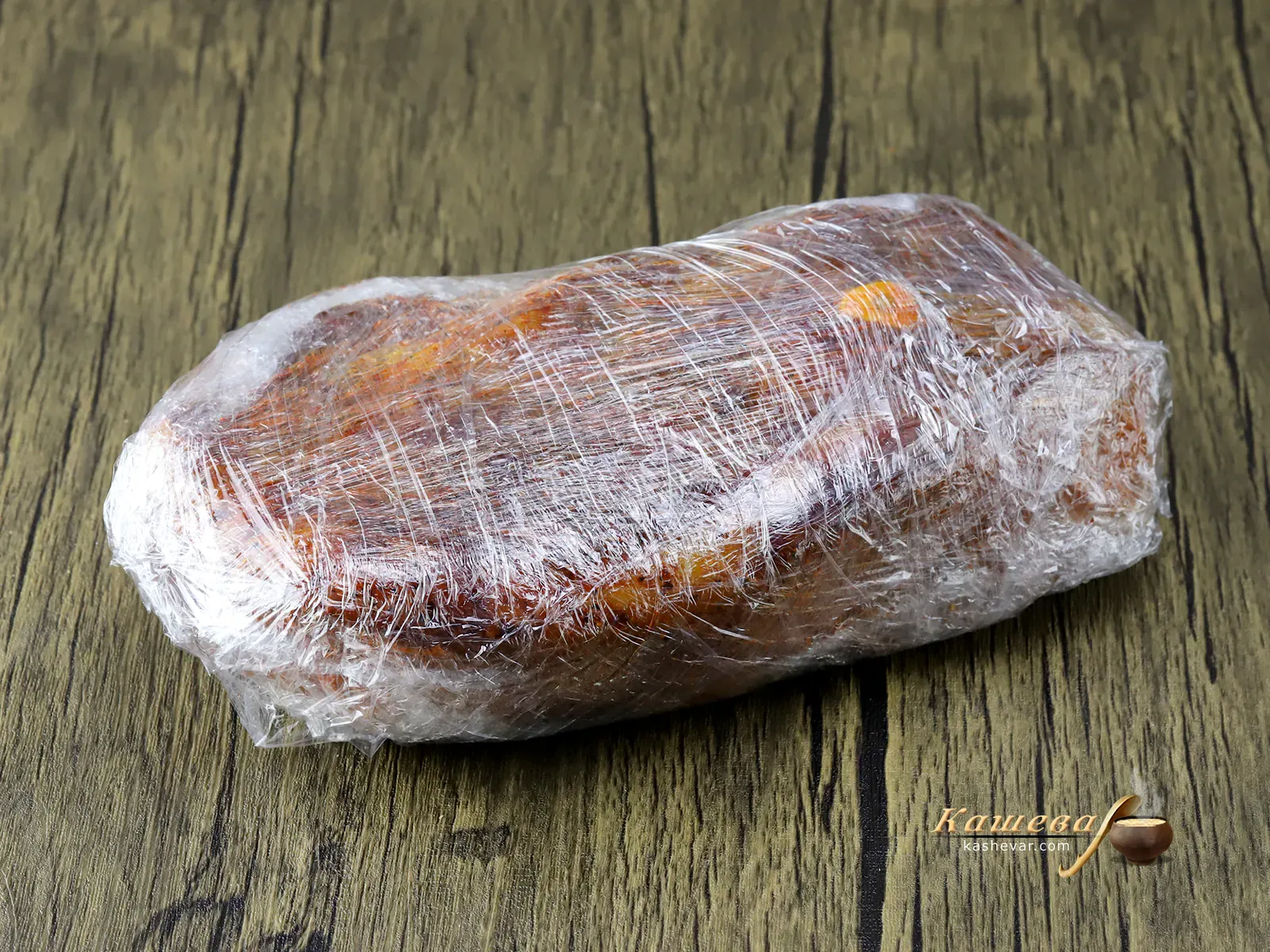
Wrap the pork cheek in plastic wrap, first covering the surface with sliced garlic. Place the meat in the refrigerator until completely cooled so the structure firms up. Serve thinly sliced after 4 hours, however the best result is achieved after resting for 24 hours.
Tips for Cooking Pork Cheek in Soy Sauce
-
Choose pork cheek with a dense texture and an even layer of fat. Excessive fat tissue can make the dish too soft after cooling. Before cooking, rinse the meat thoroughly and pat dry with paper towels so the liquid penetrates evenly during simmering.
-
Monitor the cooking temperature. The liquid should only tremble slightly without active boiling, otherwise the meat fibers may become tough. Turn the cheek periodically if it is not fully submerged in the marinade so the flavor distributes evenly.
-
For a firmer texture, keep the meat in the refrigerator for at least 12 hours. After complete cooling, the pork cheek slices better into thin pieces. Store it wrapped to prevent the surface from drying out and to preserve the aroma of the spices.