Udon with Pork and Egg

147 kcal
Udon with pork and egg – this is quite a popular recipe in Japan, and it is very easy to prepare. This is a dish of japanese cuisine. The most important element in this recipe is the broth. The broth is very bright and rich, and it forms the foundation of this recipe.
Ingredients for Udon with Pork and Egg
How to Cook Udon with Pork and Egg
Step Title
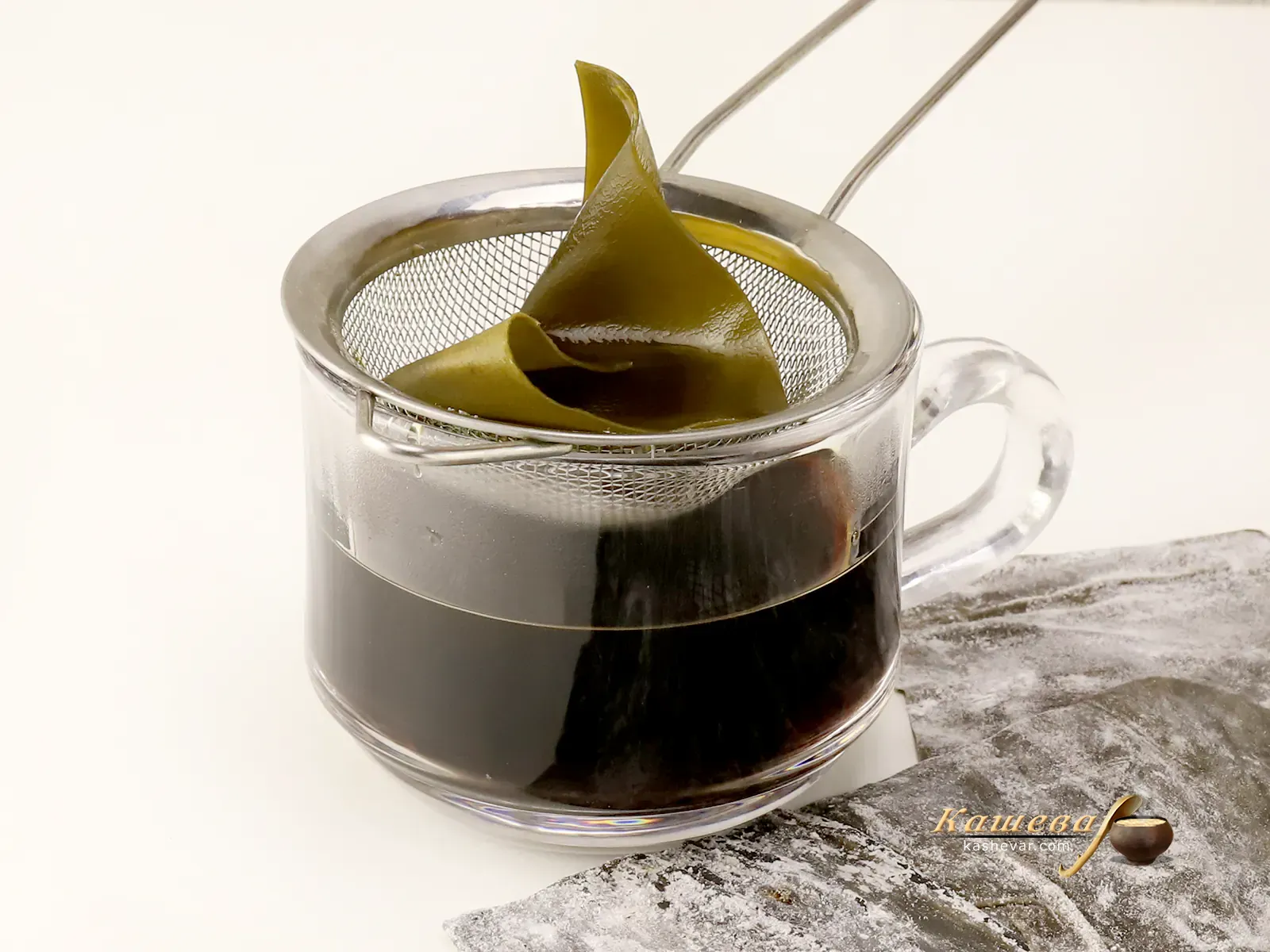
Prepare Rich Broth for Udon
Pour water, soy sauce, mirin, sake, and dashi broth into a saucepan, add sugar and kombu. Place over medium heat and simmer until the liquid volume reduces by about half so the flavor becomes more concentrated. Strain the broth through a fine sieve to obtain a clean and clear base for the dish.
Step Title
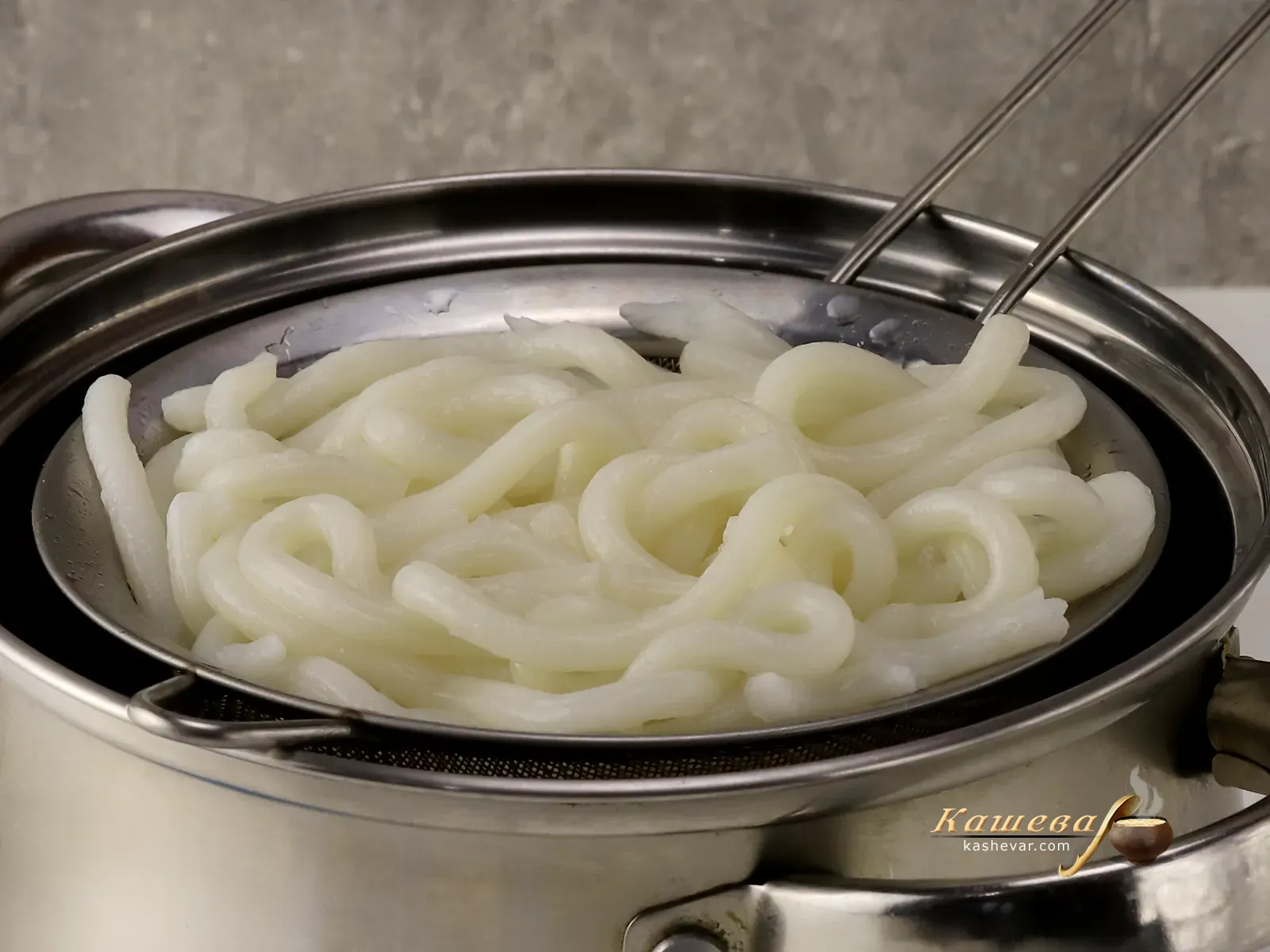
Boil the Udon Noodles
Place the udon noodles into boiling water and cook for 3-4 minutes according to the manufacturer’s recommendations. Transfer to a sieve and rinse under running water to stop the cooking process and maintain a firm texture.
Step Title
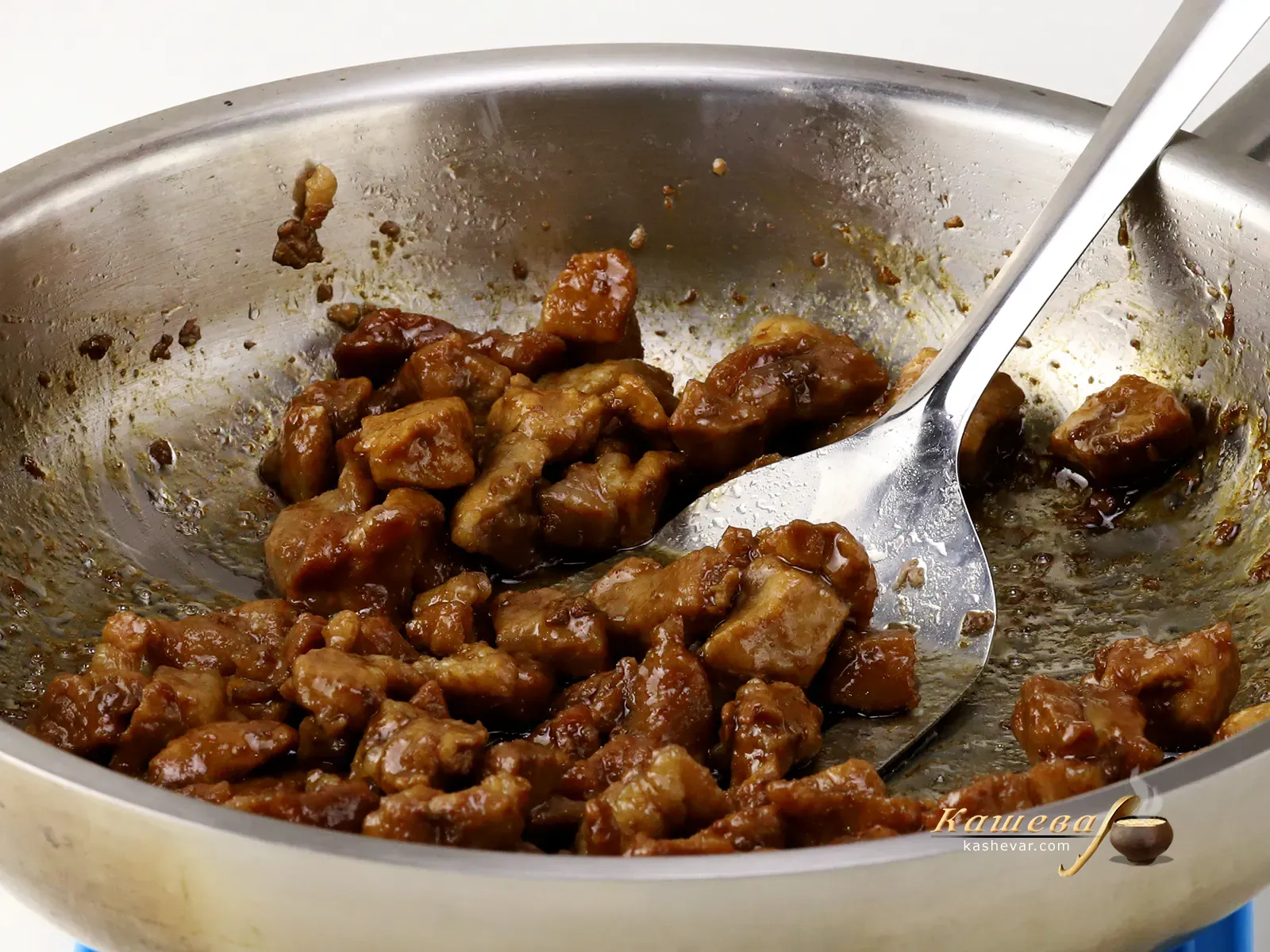
Fry the Meat and Assemble the Dish
Cut the beef into small pieces. Heat vegetable oil in a pan, add the meat and fry until lightly golden. Add soy sauce and sugar, cook over medium heat until fully done, stirring occasionally to keep the meat juicy. Place the udon into a deep bowl, pour over the hot broth, add the meat, finely chopped green onion, and nori. Carefully place the egg yolk on top, sprinkle with sesame seeds, and serve the dish immediately after preparation.
Tips for Udon with Pork and Egg
-
To achieve a deeper broth flavor, do not bring it to an active boil after adding kombu. Overheating may create unwanted bitterness. It is best to heat until the first bubbles appear and then gently reduce while controlling the heat intensity. Straining through a fine sieve or cheesecloth will ensure a clean texture without seaweed or fish flakes.
-
Do not overcook the udon noodles, as they continue to absorb liquid in the bowl. A quick rinse after boiling helps maintain elasticity and prevents sticking. Before serving, the noodles can be briefly reheated in the broth so the dish remains hot without losing structure.
-
Add the egg yolk just before serving. The hot broth will partially warm it, creating a creamy texture. If full heat treatment is required, the yolk can be carefully immersed in the hot broth for a few seconds while controlling the level of doneness.