Pork with Soybean Paste

253 kcal
Pork with soybean paste – pork is always a great addition to rice, udon, or other noodles. Many people dislike the smell of pork, but this can be easily corrected. The pork can be pre-boiled, changing the water twice, and then fried. This delicious dish belongs to Korean cuisine.
Ingredients for Pork with Soybean Paste
How to Cook Pork with Soybean Paste
Step Title
Frying Pork with Soybean Paste
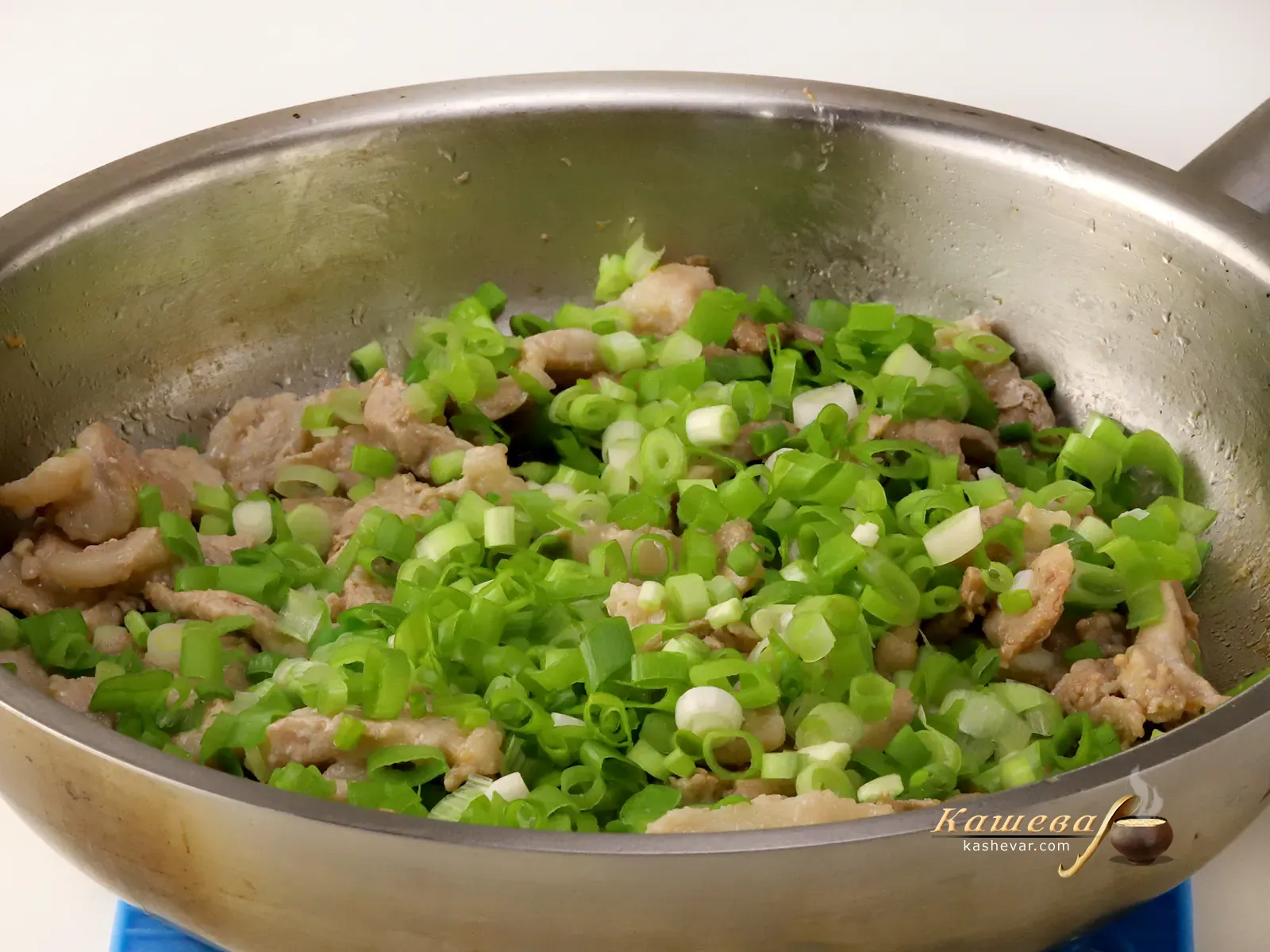
Cut the pork belly into evenly sized strips so the meat cooks uniformly. Heat a pan, pour in the sesame oil, and add the prepared pork. Add salt and fry until lightly golden so the meat remains juicy. Pour in the mirin, add finely chopped green onion, and mix thoroughly.
Step Title
Adding Soybean Paste and Spices
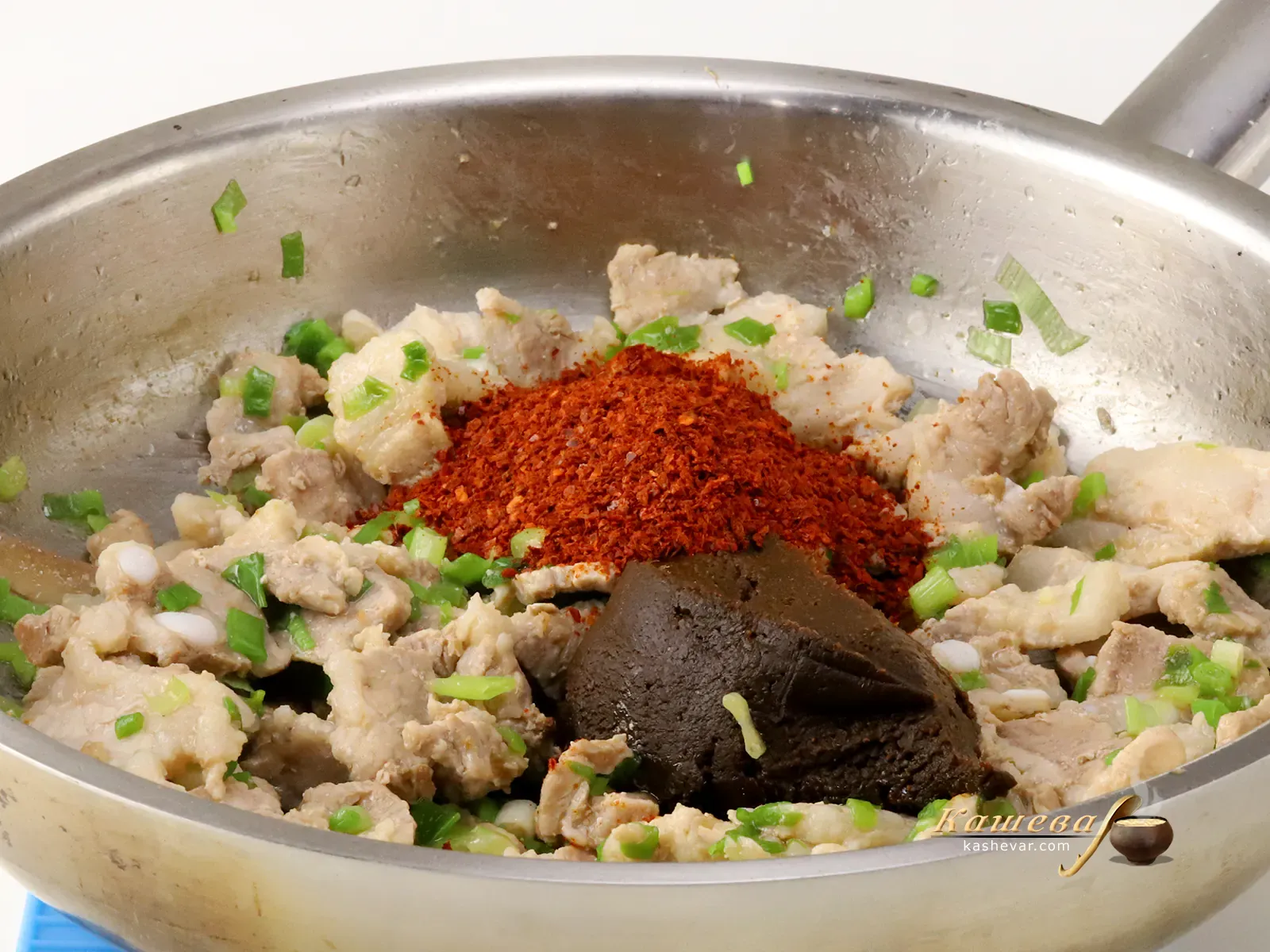
After a minute, add ground hot pepper, then soybean paste and sugar. Mix thoroughly so the soybean paste evenly coats the pieces of meat. Continue frying for about 1 minute more so the ingredients combine and release their aroma.
Step Title
Simmering Under a Lid
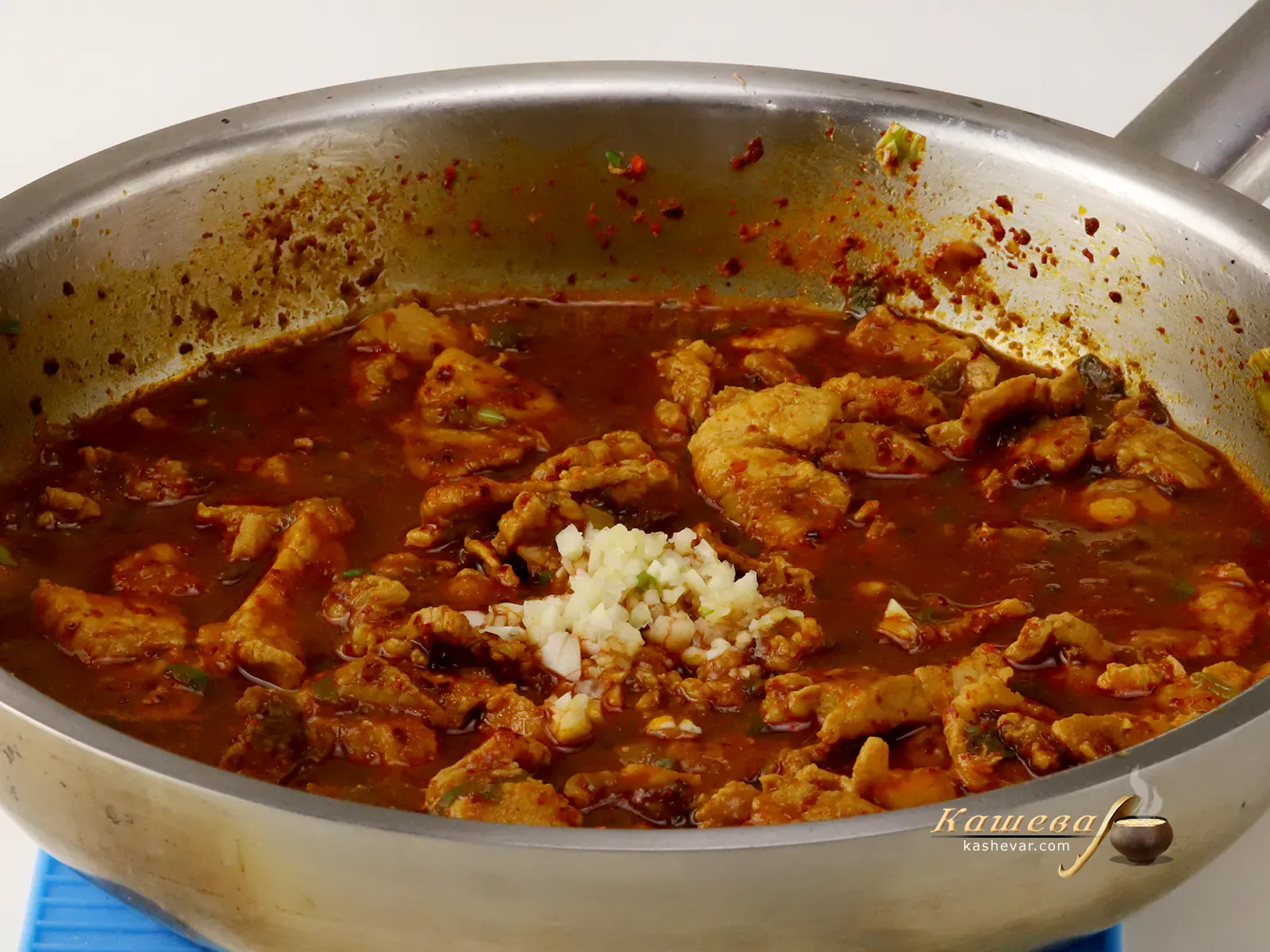
Pour the broth over the pork, add minced garlic and sesame. Stir, cover with a lid, and cook for 5 minutes so the meat becomes tender and absorbs the sauce. Serve warm with rice to highlight the rich flavor of the dish.
Tips for Pork with Soybean Paste
-
Choose pork belly with a moderate amount of fat, as the fat ensures juiciness during frying. If the pieces are too lean, the meat may become dry. Cut the strips to roughly the same thickness so they cook evenly. Do not turn the meat too often – allow a light crust to form, which will keep the juices inside.
-
Add the soybean paste at the end of frying so it does not burn. High heat can make the taste too bitter. After adding the paste, immediately stir the meat so the sauce distributes evenly. Adjust the saltiness if necessary, considering the concentration of the specific soybean paste.
-
When simmering under a lid, do not exceed the recommended time so the pork remains tender. The broth should only lightly cover the bottom of the pan, creating a concentrated sauce. If the sauce turns out too thin, cook without the lid for another 1-2 minutes to allow slight evaporation of the liquid.